Research & audit, Campaign Strategy, Creative Design, Copywriting & Photography
Background
JTI Leaf Zambia (JTI) engaged Valora to develop a high impact campaign for the company’s child labour awareness and reduction initiatives within areas where the company operates (East and West of Zambia). According to international standards and by law children aged 18 and under are not allowed to take part in tobacco farming. This has led to JTI taking a proactive role to reduce child labour, including the rollout of programmes such as Achieving Reduction of Child Labour in Support of Education (ARISE) in the country’s Western Province. To build on these initiatives and in preparation for rollout of the third ARISE programme across both the East and West provinces, JTI felt a campaign should also be developed, contributing to better results.
Understanding today
For Valora and based on prior experience, building a winning campaign would be focused on changing attitudes and behaviours around child labour. Positive change could only be delivered if the attitude towards child labour changed. This would foster behaviour changes that would contribute to fewer children being engaged in child labour. So, a starting point for this engagement was to determine what the current attitudes around child labour were. To obtain this insight, Valora conduct an audit which started with the review of reports around child labour both at a global and domestic (Zambia) level. After gathering a baseline understanding of the current situation, Valora developed a discussion guide which would be used to probe key stakeholders further on the issues around child labour, particularly within the target communities.
Explore possibilities
An interviewee list was also put together and consisted of children (18 and under) living within the target communities, tobacco farmers and their labourers, educators, media representatives, JTI staff (corporate communications and agricultural extension technicians), NGOs and representatives from key ministries (education, community development and labour and social security). Interviewing these audiences was aimed at understanding how big of a problem the use of child labour was, the reasons behind these practices and potential solutions. Key findings from the audit were that prior ARISE programmes rolled out in the West had helped reduce child labour, but more could be done. Current attitudes around child labour included farmers engaging in it either because they could not afford to hire labour and needed to use their children as extra hands and/or they were teaching their children valuable skills and life lessons through engaging them in child labour and thus felt they were doing no wrong.
Shape Tomorrow
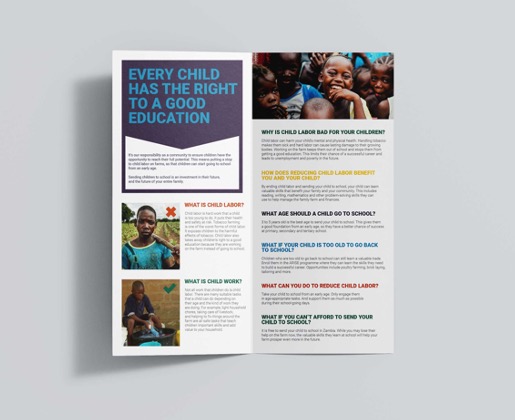
In conclusion, more needed to be done to educate the farmers around the use of child labour in tobacco farming, including the potential health risks and differentiating child labour to child work (age-appropriate tasks).
Discover Opportunites
Audit insights were leveraged to build out the campaign strategy. To guide the build out of the campaign strategy, a conceptual theory of change was drafted. The theory of change positioned children as community asset whose full potential was a function of their upbringing and access to education (including the necessary support for better outcomes). To change attitudes (and behaviour), the target communities would need to view children differently and by doing so, behave differently – by taking a more proactive approach to reducing child labour. Adding on to the theory of change, Valora’s strategy team referenced the prospect theory to develop the messaging framework for the campaign. For each target audience, Valora developed messages that positioned what the community would gain by reducing child labour and ensuring that it would always outweigh what they stood to lose (extra hands on the farm).
Discover Opportunites
A tone to be used to communicate these messages was also recommended and aligned with JTI’s corporate voice, ensuring sincerity and authenticity for each of the developed messages. To shift mindsets, Valora recommended a provocation which devalued a child’s worth on a farm. The provocation further substantiated the merits of supporting children to attend and do well at school as opposed to being engaged in child labour. Using these markers an overarching message was crystallised – when our children prosper, we all prosper. Let’s work together to end child labour in our community. All messages would be developed from this frame of reference with emotional, functional, and segmented cues being used to flesh out each target audience’s messaging. Initiatives to support the campaign were also suggested as Valora believes in changing by doing and not just saying. The doing reinforces the message and, thus, fosters the required change hence their recommendation.
Discover Opportunites
Activities suggested included the use of social incentives, partnering with secondary and tertiary stakeholders and reinforcing community advocacy to spread the message around reducing child labour and how this practice benefits the community at large. In addition to activities, channels to communicate key messages were also recommended and were divided into three broad categories – always on, broad reach and focused engagement. A final takeout of the communication strategy was for the campaign to be positioned in such a way that it was owned by the community and not the sponsors of the initiative. This would be important for the campaign’s sustainability. Valora suggested the development of a campaign community who would review messaging and take responsibility for ensuring that the campaign would not lose momentum after its official launch.
Shape Tomorrow
Post approval of the campaign strategy, Valora’s creative team further built out the messaging and designs of tools that would be used to deploy the campaign’s first phase centred around raising awareness (education, highlighting, engagement) on the benefits of reducing child labour. The second and third phases would consist of the rollout of the recommended interventions (in strategy) and lastly an evaluation of the results – and serve as the starting point for campaign review, evolution, and further rollout.
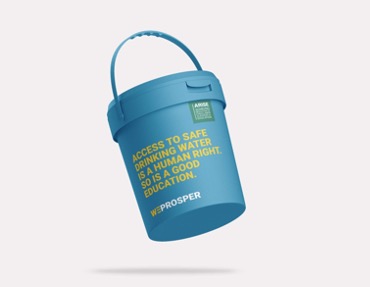
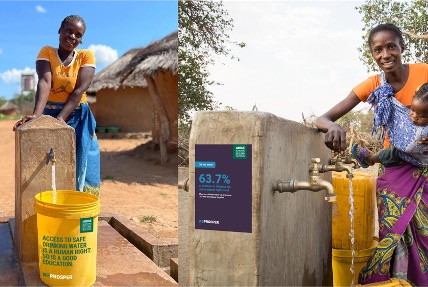
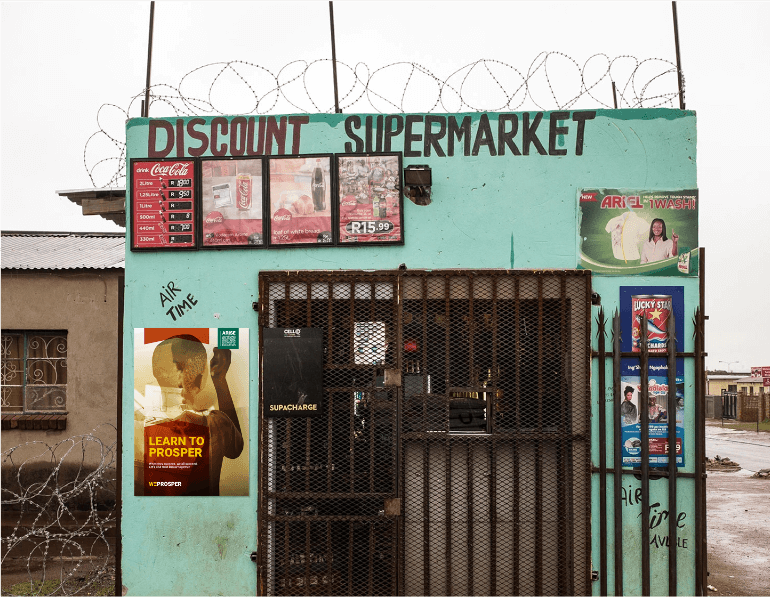
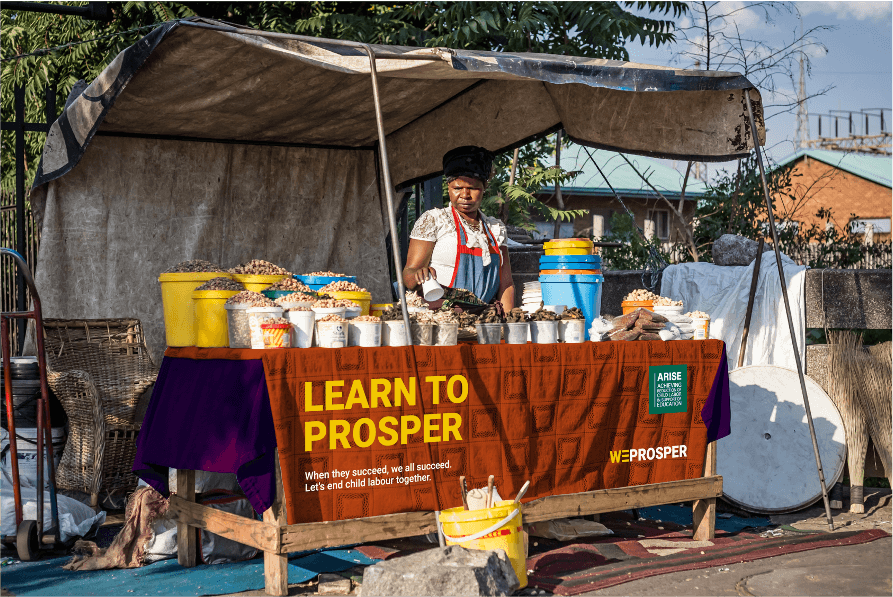
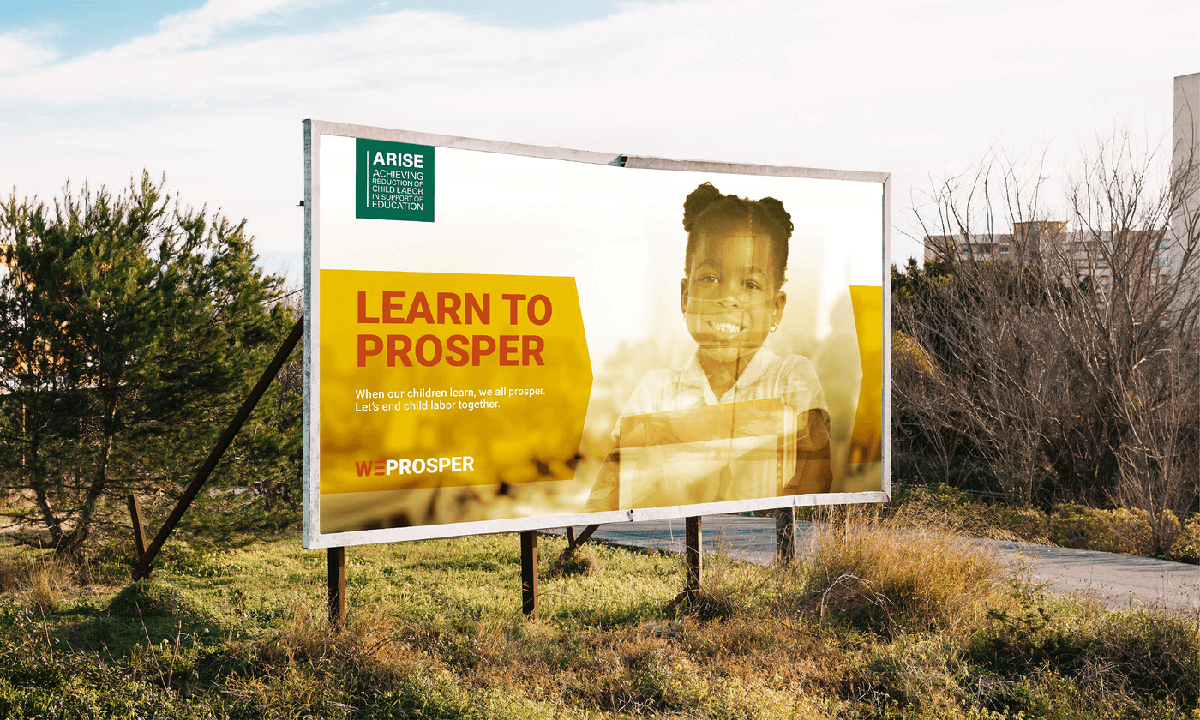
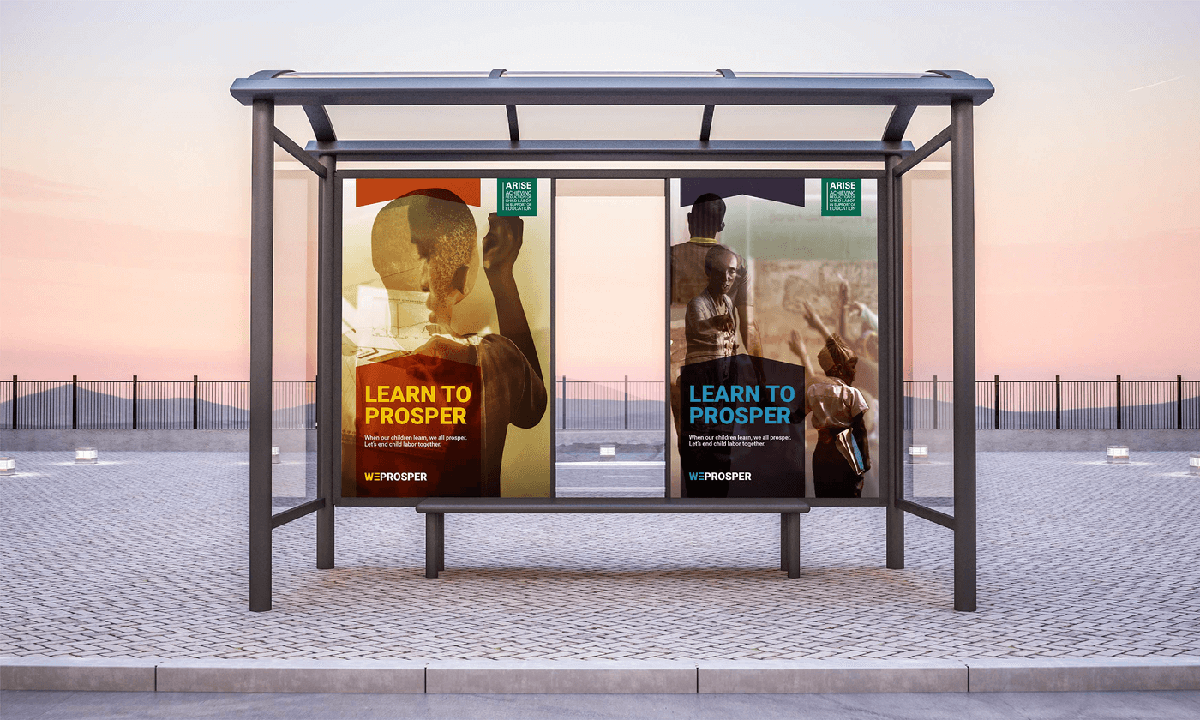
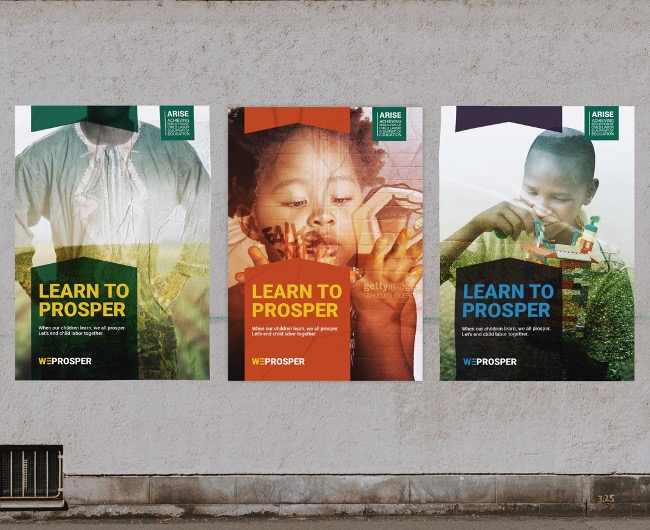
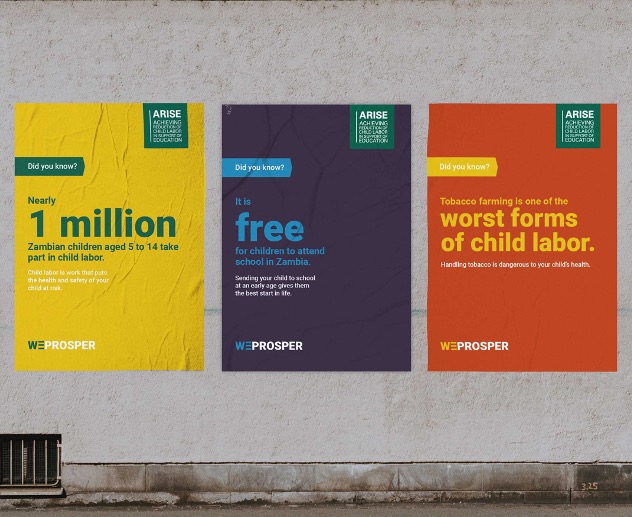
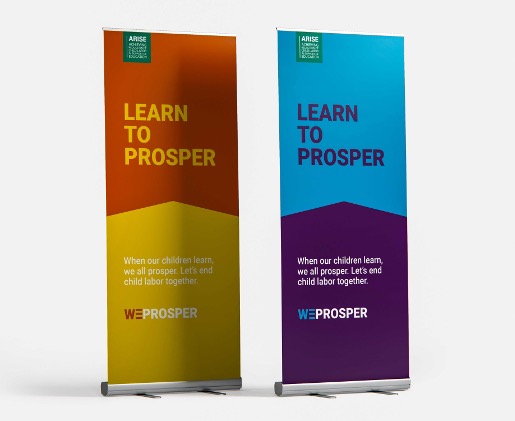
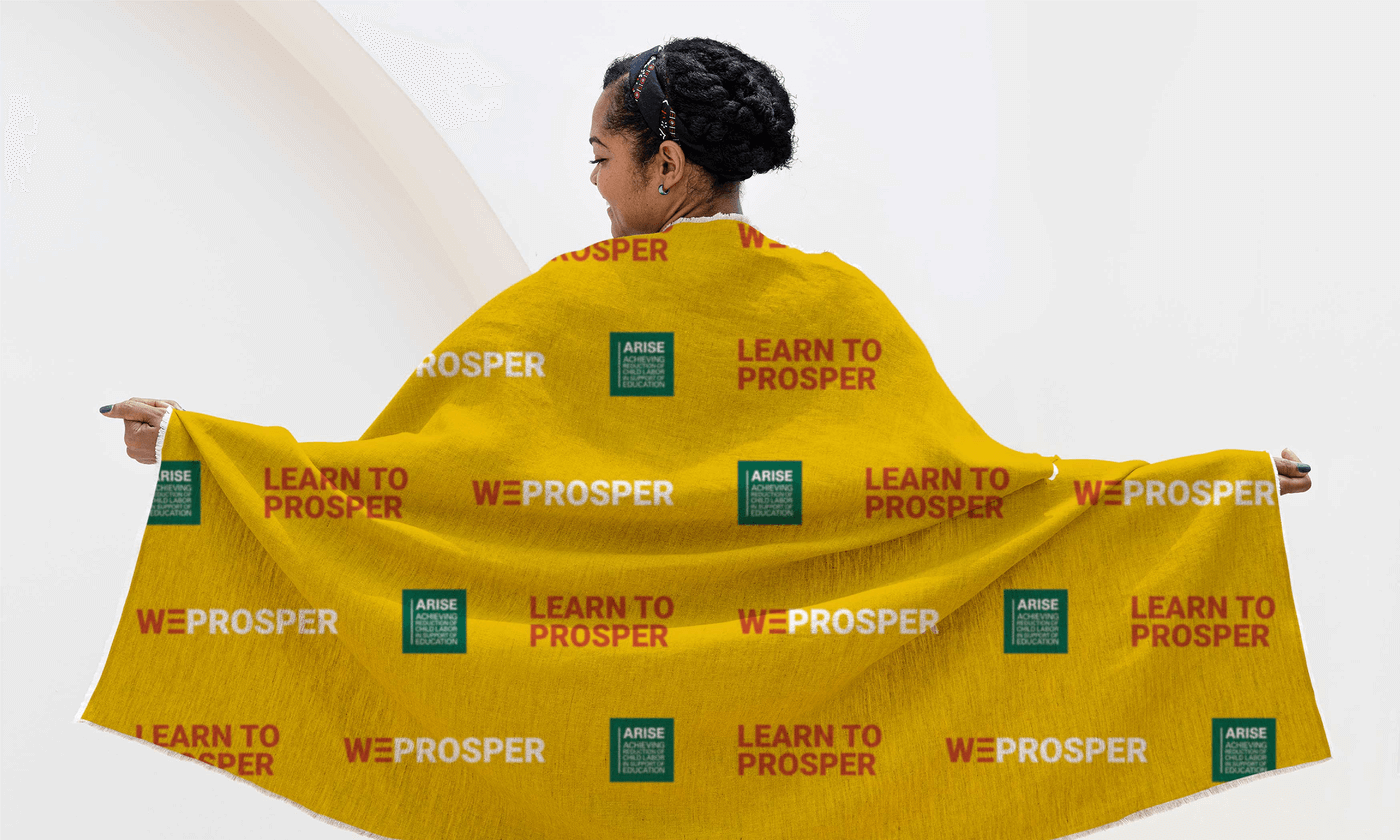
For priority channels | platforms (face-to-face conversations, radio shows, billboards, banners, and other collateral where key messaging could be housed such as buckets, tablecloths, bunting, umbrellas, t-shirts, caps, stationery, backpacks, posters, signage, waterpoints, tobacco bales, head and body wraps, etc), Valora’s copywriting team built out the copy for these solutions for review and approval. Post approval of the copy, the design team developed mock ups and artwork for each of the collateral items for review and approval.
Shape Tomorrow
Designs were built out using the ARISE programme’s brand guide | assets, which provided more autonomy around creative expression. To foster the necessary buy in from a change and investing in potential standpoint, Valora suggested the use of current and future imagery (standalone or juxtaposed) across elements such as billboards, posters, and banners to further sell the campaign’s story from a target audience buy-in viewpoint.
A photography style guide was also prepared which would be used to rollout a photoshoot(s) aimed at building a library of images for this and other associated campaigns. In addition to building out elements for the external campaign, Valora developed campaign materials for internal audience appreciation. To assess the campaign, JTI hosted a presentation for feedback with overall sentiment being positive and the feedback used to strengthen the outputs before official launch and rollout (July 2022 onwards).